PLA vs PETG: Which Filament Should Beginners Start With?
PLA vs PETG compared on print settings, heat resistance, strength, stringing and price, from manufacturer data sheets, not forum lore.
Updated · We may earn a commission from links on this page. How that works
Quick answer
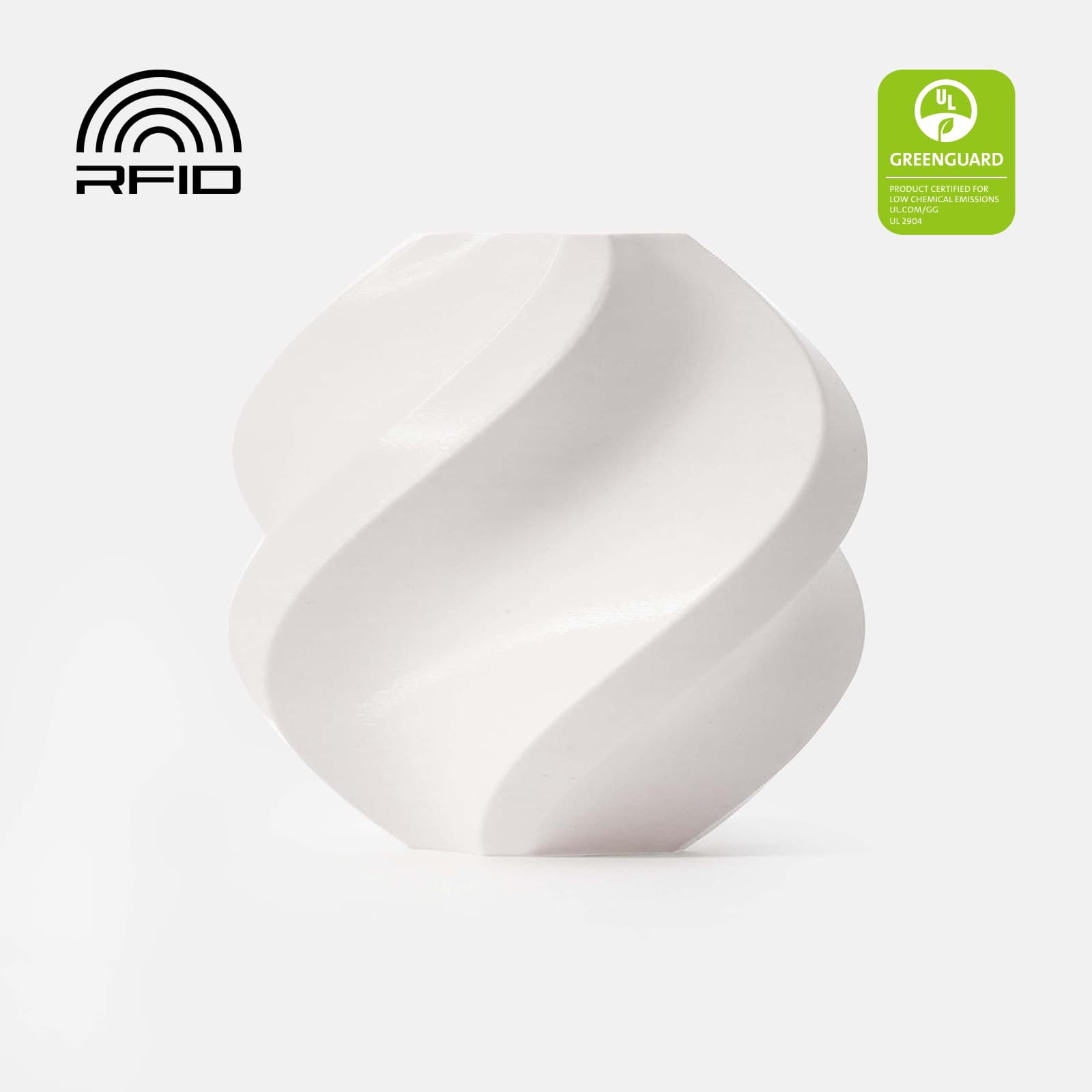
Best starter PLA
Bambu Lab PLA Basic 1kgThe default first spool. If you own one filament, this is the one.
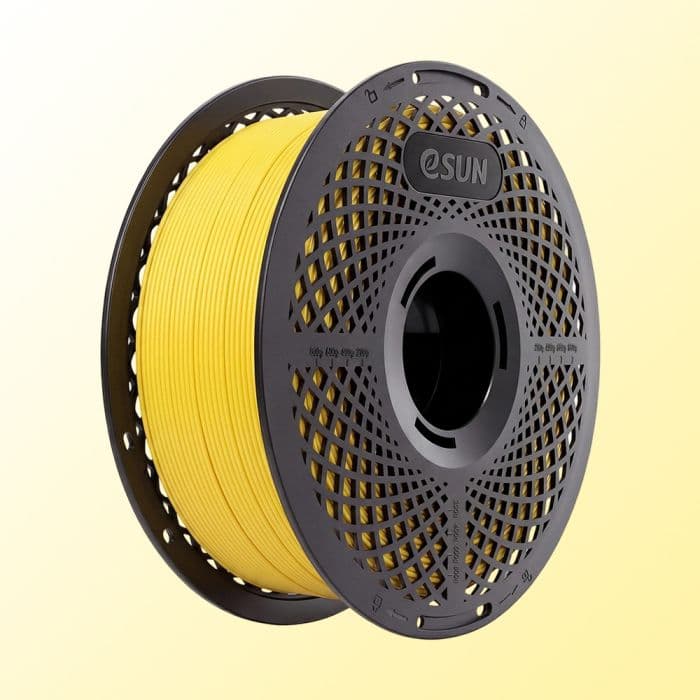
Tougher PLA alternative
eSUN PLA+ 1kgThe middle step: tougher than basic PLA, without PETG's moisture and stringing demands.
Start with PLA. That is the quick answer, and it holds for nearly every first-time printer owner. PLA prints cooler, sticks easier, strings less and forgives mistakes that PETG punishes. Switch to PETG when you have a specific reason: a part that must survive heat, live outdoors, or take knocks without snapping. PETG vs PLA is not a contest with one winner; it is a choice between the easy filament and the tougher one, and this guide shows exactly where each earns its place.
Temperatures, heat resistance and strength figures below come from manufacturer technical data sheets (Bambu Lab, eSUN, Polymaker, Prusament), checked 25 October 2026. Where brands disagree, both figures are shown rather than averaged away.
Quick answer
- Start with PLA if you are new, print decorative models, prototypes or anything that lives indoors at room temperature.
- Switch to PETG for parts that face heat (a warm room, a car in mild sun, near a window), outdoor use, or functional parts that must flex instead of snap.
- Print both on the same printer. Every printer in our guides handles PLA and PETG. No upgrade is needed to switch, only different slicer settings and drier filament.
PLA vs PETG at a glance
| Property | PLA | PETG |
|---|---|---|
| Nozzle temperature | 190 to 230°C (brand range) | 230 to 260°C (see note) |
| Bed temperature | 35 to 60°C | 65 to 90°C |
| Heat deflection (HDT) | 53 to 57°C | 64 to 78°C |
| Glass transition (Tg) | Around 60°C (PolyTerra 60.6°C) | Around 81°C (PolyLite PETG) |
| Stiffness | Stiffer, snaps under impact | More flexible, bends before breaking |
| Impact resistance | Lower (Bambu PLA 26.6 kJ/m²) | Higher (Bambu PETG 52.7 kJ/m²) |
| Ease of printing | Easiest filament there is | Easy, but fussier about moisture |
| Stringing | Low | Higher, needs dry filament |
| Moisture sensitivity | Moderate (0.36% equilibrium, Polymaker) | Higher (0.54% equilibrium, Polymaker) |
| Price per kg | Budget PLA from ~$14 | Budget PETG from ~$12.50 in packs |
PLA vs PETG compared, manufacturer data sheets
Note on the PETG nozzle range: Bambu's own documents disagree, with some listings giving 230 to 260°C and others 240 to 270°C for PETG Basic, apparently across data sheet versions. The 230 to 260°C range is the safer starting point, and the right temperature for your specific spool is the one printed on its own packaging or data sheet.
Which to start with: PLA
PLA is the beginner filament for reasons that show up in the data sheet, not just in reputation. It prints at 190 to 230°C across brands (Bambu PLA Basic, eSUN PLA+ and Polymaker PolyTerra all sit in or near that band), on a bed of just 35 to 60°C, which means no enclosure, no heated chamber and no warping drama on an open-frame printer like the A1. It is stiff, which makes it easy to print precisely, and it strings far less than PETG, so first prints come out cleaner with default settings.
PLA's weakness is heat, and it is a hard limit, not a soft one. With a heat deflection temperature of 53 to 57°C depending on brand, a PLA part left in a hot car or on a sunny windowsill softens and warps. Our cosplay guide says exactly this, and the data sheet numbers agree with it: PLA softens and warps in heat, full stop. PLA is also brittle: it snaps where PETG bends, which is why it is a poor choice for clips, brackets and anything that takes repeated flexing.
Best for: decorative models, prototypes, figurines, cosplay pieces that stay indoors, and every first spool you buy.
Image: Bambu LabBambu Lab PLA Basic 1kg
The default first spool. If you own one filament, this is the one.
Good stuff
- Easiest filament to print well
- Budget price, around $14.99 list at the Bambu US store
- Clean prints with low stringing
- Huge color range
Watch out for
- Softens at 53 to 57°C, so no hot cars or sunny windows
- Brittle: snaps instead of flexing
- Not food-safe, per Bambu's own statement
When PETG is worth switching to
PETG earns its place in three situations: heat, outdoor use and toughness. Its heat deflection temperature of 64 to 78°C (brand dependent, with Polymaker PolyLite PETG at 78°C and a glass transition near 81°C) sits clearly above PLA's 53 to 57°C, which is why our cosplay guide calls PETG more heat-tolerant. That is a real advantage for parts in warm rooms, near windows or in mild outdoor sun. It is not a hot-car guarantee: PETG still deforms well below boiling, and a car interior on a summer day exceeds even PETG's limits, so do not promise yourself a dashboard-proof part.
On toughness, the data sheet story is more subtle than "PETG is stronger." Tensile strength alone does not separate them: Bambu's own figures put PLA Basic at 35 MPa and PETG Basic anywhere from 32 to 48 MPa depending on which data sheet version you read. What PETG clearly wins is impact resistance and flexibility: Bambu's PETG measures 52.7 kJ/m² impact strength against PLA's 26.6, roughly double, and its bending modulus is far lower (around 1,670 to 1,790 MPa versus PLA's 2,750), which is the formal way of saying it bends where PLA snaps. For brackets, clips, drone parts and anything that gets knocked around, that is the difference that matters.
Best for: functional parts, outdoor use, warm environments, brackets and clips, and anything that must survive being dropped.
What changes on the printer
Switching from PLA to PETG is a settings change, not a hardware change, but the settings matter more than beginners expect.
Temperatures. PETG needs a hotter nozzle (230 to 260°C) and a much hotter bed (65 to 90°C versus PLA's 35 to 60°C). That hotter bed is the single biggest practical difference: first-layer adhesion and warping behave differently, and a glue stick or adhesion aid on the bed, which Bambu recommends for both its PLA and PETG, matters more with PETG.
Stringing. PETG strings more than PLA. Every manufacturer says so, including Bambu, whose PETG marketing frames reduced stringing as an improvement over typical PETG. The fix sequence, in order, is: dry the spool first, then lower the nozzle temperature slightly, then raise retraction. Do not start with retraction on a wet spool; wet PETG strings no matter what your retraction is set to. Prusa's guidance matches this order, and eSUN's own listing warns that PETG strings badly after absorbing water.
Moisture. PETG absorbs measurably more moisture than PLA: Polymaker's data sheets give equilibrium water absorption of 0.54% for PolyLite PETG versus 0.36% for PolyTerra PLA, and Bambu calls PETG highly moisture-absorbent, requiring drying before use. Drying guidance runs hotter for PETG too: typically 65°C for 6 to 8 hours, versus 45 to 55°C for PLA. If you own a dryer, PETG is where it earns its keep. Our filament dryer guide covers the options.
Speed. PETG generally prints a little slower than PLA for best results, and its hotter bed means longer heat-up and cool-down. None of this needs an enclosure: unlike ABS and ASA, PETG prints fine on open-frame machines.
Printing PETG on an A1 or P1S
Both machines handle PETG with no upgrades. On the A1, PETG's 65 to 90°C bed and 230 to 260°C nozzle sit comfortably inside the machine's range, and the open frame is no problem for PETG the way it is for ABS. On the enclosed P1S, PETG prints just as well, with the enclosure helping first-layer adhesion on larger parts. The one thing to watch on either machine is the AMS: PETG runs through Bambu's AMS units, but wet PETG in an AMS is a stringing and clogging risk, so dry the spool before loading it into a feeder system. The AMS Lite on the A1 does support PETG; the materials it excludes are TPU, wet PVA and BVOH, and carbon or glass-fiber filament.
Use-case picks
- First spool, learning the hobby: PLA. Bambu PLA Basic or any of the PLA picks in our best PLA filament guide.
- A part that lives in a warm room or outdoors: PETG. The heat deflection advantage is real and documented.
- A bracket, clip or functional part: PETG. Impact resistance roughly double PLA's, and it flexes instead of snapping.
- A detailed decorative model: PLA. Stiffer, crisper detail, less stringing to clean up.
- A tougher PLA before jumping to PETG: eSUN PLA+, which our PLA guide already seeds. Its data sheet tensile figure of 63 MPa is far above standard PLA, though test standards differ between brands, so treat cross-brand tensile comparisons with caution.
Image: eSUNeSUN PLA+ 1kg
The middle step: tougher than basic PLA, without PETG's moisture and stringing demands.
Good stuff
- Tougher than standard PLA, a stepping stone to PETG
- Prints at familiar PLA temperatures (210 to 230°C)
- Already seeded in our PLA guide
Watch out for
- Still softens at PLA-like temperatures (HDT 53°C)
- Still brittle compared with PETG on impact
- US official-store price unverified at writing time
Storage and drying
Both filaments need sealed storage with desiccant, but PETG needs it more. Bambu's guidance for both materials is sealed storage below 20% relative humidity. In practice: keep spools in sealed bags or boxes with desiccant, and dry PETG at around 65°C for 6 to 8 hours before any important print, or whenever stringing appears. Dry PLA at 45 to 55°C for 6 to 8 hours. A dryer that holds 65°C covers both materials; one that caps at 50°C, like some budget two-spool boxes, dries PLA fine but cannot fully dry PETG. Check the ceiling before buying, in our dryer guide.
Price: which is cheaper?
The honest answer is that brand and bundle matter more than material. On the two verified official-store data points, budget PLA and budget PETG cost roughly the same: Bambu PLA Basic lists at $14.99 per kg, while Bambu PETG Basic shows around $12.50 per roll in a 4-roll pack and $10.91 per roll in bulk sale pricing. No verified basis exists for claiming PETG is systematically more expensive per kg. Reseller prices for Polymaker PolyLite PETG run $21.99 to $25.00, but the official Polymaker US store PETG price was not verified at writing time, and neither was eSUN's US official-store pricing, so those figures are not quoted as official. Shop the bundle, not the material.
Food safety: what manufacturers actually say
If you mention food use at all, be precise, because this is where filament guides most often mislead. No manufacturer claims a standard PLA or PETG print is food-safe. Bambu states outright on its PLA Basic and PETG pages that the filament is not food-grade and finished prints should be avoided for food storage or contact. Polymaker states it has no data on whether its material is food safe, and that no 3D printing material on the market is FDA food-safe compliant as a finished object, because certification applies to the object, not the base material. The reasons are physical: layer lines harbor bacteria, brass nozzles can leach lead, and pigments and additives are uncertified. PETG's water resistance makes it better for outdoor and functional use, not for food use. Do not write PETG as the food-safe option; it is not one.
FAQ
When to use PETG vs PLA?
Use PLA for decorative models, prototypes and anything indoors at room temperature. Use PETG when a part faces heat above about 55°C, lives outdoors, or must flex and absorb impacts instead of snapping. PETG's heat deflection of 64 to 78°C versus PLA's 53 to 57°C is the number behind that rule.
Which is cheaper, PLA or PETG?
Neither, systematically. Budget PLA lists around $14.99 per kg at Bambu's store, and budget PETG runs about $12.50 per roll in multi-packs. Brand, bundle and sale timing move the price more than the material does, so compare the specific spool you are buying.
At what temperature does PETG deform vs PLA?
PLA's heat deflection temperature is 53 to 57°C depending on brand, and PETG's is 64 to 78°C, with a glass transition near 81°C for Polymaker's PETG. PETG survives warm rooms and mild sun that warp PLA, but neither survives a hot car interior.
Why print with PLA vs PETG?
Print PLA because it is the easiest filament to print well: low temperatures, low warping, low stringing. Print PETG because it is tougher and more heat-resistant: roughly double PLA's impact resistance, and flexible where PLA snaps. Choose by what the part must survive, not by which filament sounds better.
Further reading
- Best PLA filament: the PLA picks referenced above, with buy links.
- Best filament dryer: PETG is more moisture-sensitive, so drying matters more here.
- Best 3D printer for cosplay: its PLA vs PETG vs ASA armor paragraph and FAQ, consistent with the heat figures above.
- Best 3D printers under $500: "PLA and PETG, the two filaments every beginner should start with."
Related guides
- Buying guideBest PLA Filament for Beginners in 2026Six PLA filaments compared: price, tolerance, and real-world reliability for beginners, plus how to store filament so moisture doesn't ruin prints.
- Buying guideBest Multicolor 3D Printer in 2026Most beginners do not need multicolor printing. For those who do, these are the best multicolor printers by budget, with purge waste explained honestly.
- Buying guideBest Resin 3D Printer for Beginners in 2026The best resin 3D printers for beginners in 2026, plus the safety workflow every first-timer must follow before buying resin, gloves, and a cure station.