Best PLA Filament for Beginners in 2026
Six PLA filaments compared: price, tolerance, and real-world reliability for beginners — plus how to store filament so moisture doesn't ruin prints.
Updated · We may earn a commission from links on this page. How that works
Our top picks
 Check price on Amazon
Best overall value
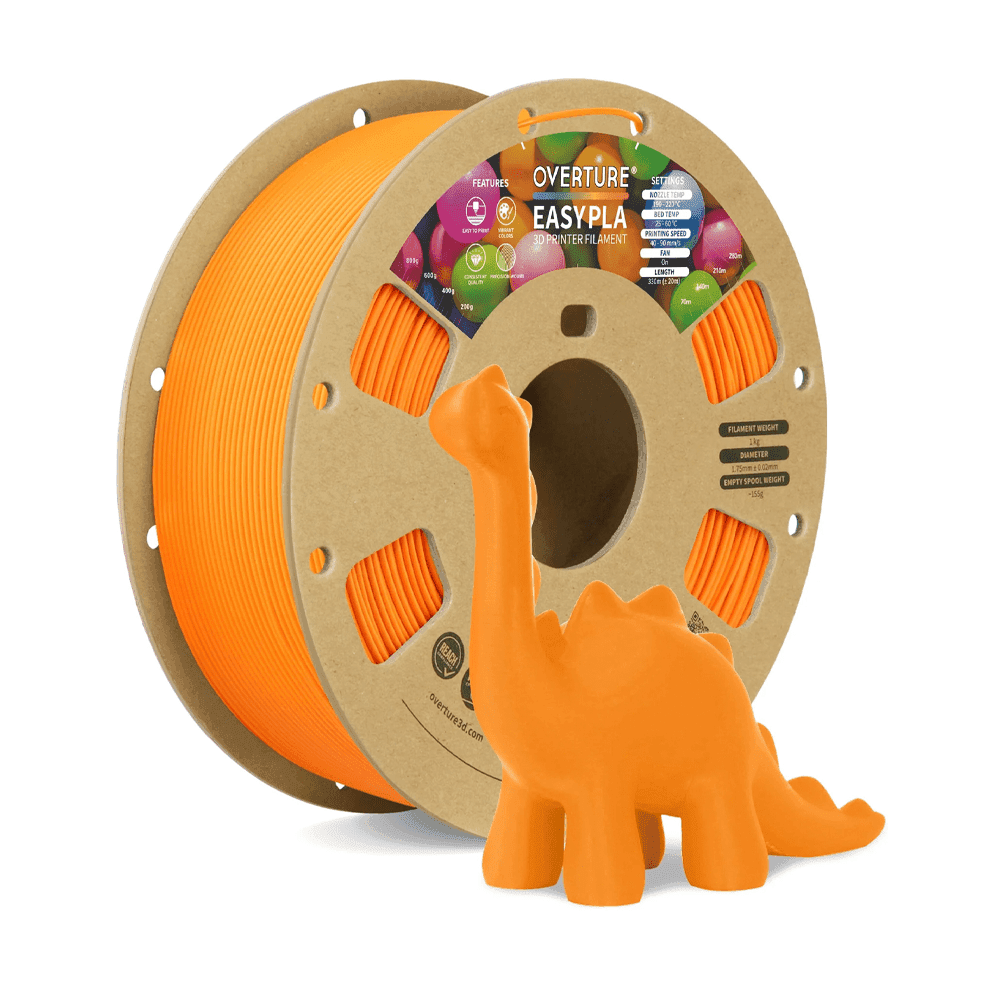
Overture PLA 1kgThe safe default. If you don't want to think about filament, buy Overture in whatever color you like.
Cheapest name brand
SUNLU PLA 1kgThe budget gamble: great price, real risk. Buy where returns are easy and check every spool.
Toughest budget PLA
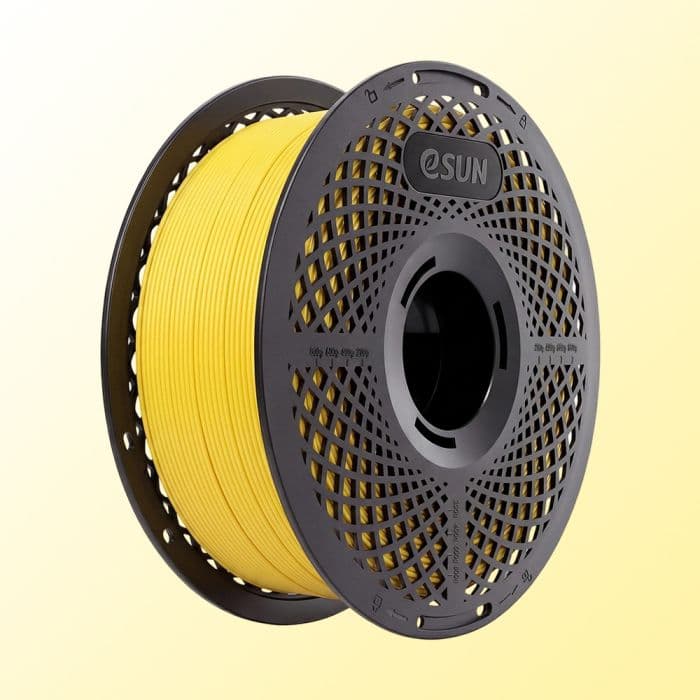
eSUN PLA+ 1kgBuy it when parts need to survive being handled. The PLA+ toughness upgrade is real.
Most reliable
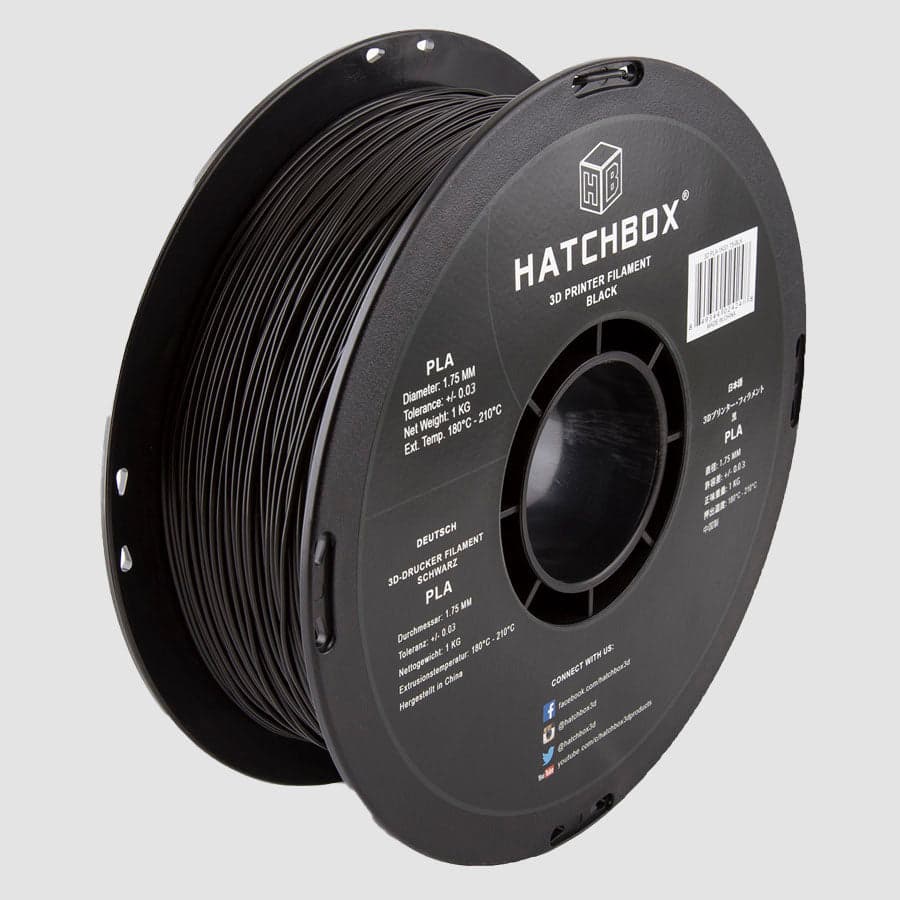
Hatchbox PLA 1kgThe "it just works" pick. Expensive for what it is, and worth it when a failed print costs you more than filament.
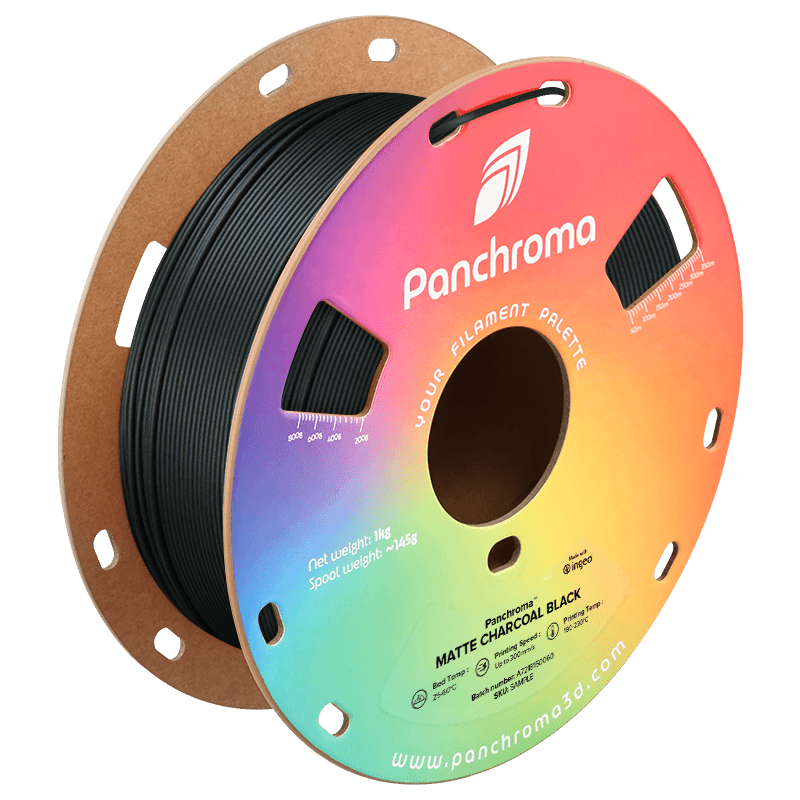
Best matte finish
Polymaker PolyTerra PLA 1kgBuy it for the matte look, which nothing else here matches. Just know the tolerance spec is disputed and the cardboard spool needs dry storage.
For Bambu printers
Bambu Lab PLA Basic 1kgYou're paying extra for convenience, and the price is upfront about it. On a Bambu printer with bulk pricing, the time you save is worth it. Anywhere else, skip it.
Filament is the one 3D printing purchase you make over and over. You buy a printer once; filament is the ongoing cost, and it's also the most common cause of failed prints. A badly wound spool tangles mid-print. Inconsistent diameter clogs the nozzle. Filament that has soaked up moisture pops and strings. When a print fails at hour six, it's usually the plastic's fault, not the printer's.
The good news is that PLA is the most forgiving filament there is, and you don't need expensive filament to get good prints. You need consistent filament. This guide compares the six brands that reviewers and owner communities keep coming back to. That includes the shortlist of "just works" brands (Overture, eSUN, Polymaker, Hatchbox) with stock profiles in Bambu Studio and confirmed AMS compatibility. There are no exotic materials here, just the everyday PLA beginners actually buy.
Our top picks at a glance
| Product | Price | Tolerance | Best for |
|---|---|---|---|
| Overture PLA 1kgCheck price | ~$10–18/kg | ±0.03 mm | Best overall value |
| SUNLU PLA 1kg | ~$9–11/kg | Claims ±0.02 mm | Cheapest name brand |
| eSUN PLA+ 1kg | ~$13–16/kg | ±0.03 mm | Toughest budget PLA |
| Hatchbox PLA 1kg | ~$28/kg | ±0.03 mm | Most reliable, most-reviewed |
| Polymaker PolyTerra PLA 1kg | ~$17.59/kg | ±0.02–0.05 (conflicting) | Best matte finish |
| Bambu Lab PLA Basic 1kg | ~$22.99/roll | ±0.03 mm | Bambu printers only |
Prices verified October 2026. They move with sales, so check the live price before buying.
Best overall value: Overture PLA
Beginner communities recommend Overture by default, and for good reason: it's the rare budget filament that's both cheap and consistent. Typical pricing runs ~$10 to $18/kg depending on finish (verified October 2026). Some roundups quote exact figures like $13.98, but that was a sale price we couldn't confirm as live, so go by the range.
The specs are solid: ±0.03 mm tolerance on standard lines, with specialty lines (Rock PLA, Matte PLA) claiming ±0.02. Spools arrive vacuum-sealed with desiccant and include a sample build plate, a small touch that suggests the brand actually prints with its own product. The color range is huge, covering standard, matte, silk, marble, glow-in-the-dark, and metallic.
For Bambu owners, Overture has stock profiles in Bambu Studio and confirmed AMS compatibility, so there's no tuning ritual. Reviewers rate it above eSUN and Hatchbox on packaging and color variety, and above both on clean winding and consistent extrusion.
One specific warning: the spoolless "Refill" version will tangle if you cut the retaining bands before mounting it on a spool. That's user error, but it comes up often enough to mention. Cut the bands only after the refill is seated.
Image: OvertureOverture PLA 1kg
The safe default. If you don't want to think about filament, buy Overture in whatever color you like.
Good stuff
- Consistent extrusion and clean winding
- Huge color and finish range
- Stock profiles in Bambu Studio, AMS-compatible
- Best price-to-reliability ratio here
Watch out for
- ±0.03 mm looser than ±0.02 leaders
- Price varies a lot by finish
- Spoolless refill tangles if bands cut early
Cheapest name brand: SUNLU PLA
SUNLU divides opinion more than any brand on this list. It's the cheapest name-brand PLA (~$9 to $11/kg, with multi-packs lowering the per-kg cost further, verified October 2026), and it shows. Listings claim ±0.02 mm tolerance, but independent testing found diameter variations you could see with the naked eye, and real-world tolerance is closer to budget-tier ±0.05. Amazon buyer reviews from 2025 and 2026 repeatedly mention tangles and binds mid-spool.
It also has AMS quirks. Newer blue spools run slightly narrower and can rub in the AMS on P1S and X1C machines, and some owners have reported brittle mini-spools shredding inside the AMS.
So why is it on the list at all? Because a good SUNLU spool is genuinely good. One long-term reviewer logged 750 hours on SUNLU PLA+ 2.0 with no clogs and rated it tougher than Bambu's own PLA Tough. The value is real; you just accept that every spool is a bit of a lottery.
Our advice: buy SUNLU from a retailer with easy returns, inspect the winding when it arrives (a messy wind is a tangle waiting to happen), and don't run it unattended in an AMS until you've gotten through a full spool without issues.
Image: SUNLUSUNLU PLA 1kg
The budget gamble: great price, real risk. Buy where returns are easy and check every spool.
Good stuff
- Lowest price of any name brand
- Stock Bambu profiles work well
- PLA+ 2.0 rated tougher than pricier rivals
Watch out for
- Inconsistent QC spool to spool
- Tangle and bind complaints on Amazon
- Some spools rub inside the AMS
Toughest budget PLA: eSUN PLA+
First, a terminology note. PLA+ (sometimes called PLA Plus) isn't a different material category. It's PLA blended with modifiers that make it tougher and less brittle than standard PLA, so it prints like PLA but survives handling that would crack plain PLA parts. eSUN's PLA+ is the flagship example.
eSUN has the longest manufacturing history of the three budget brands, and long-term testing reflects it: eSUN PLA+ was "the primary filament" in one reviewer's 40-spool, two-year test. Its ePLA-HS high-speed variant (rated to 350 mm/s) was named "best budget high-speed PLA" in 2026 coverage. Typical pricing runs ~$13 to $16/kg, and an Amazon 2-pack at $24.99 works out to $12.50 per roll (verified October 17, 2026).
The caveats are real, though. eSUN's 4.2-star Amazon rating is the lowest on this list, and batch inconsistency is the recurring complaint. It also wants hotter nozzle temperatures (210 to 230°C) than standard PLA, and its ±0.03 mm tolerance trails the ±0.02 claims of pricier rivals.
For functional parts that get handled, like brackets, clips, and toys that leave the house, PLA+'s extra toughness is worth the small premium over basic PLA.
Image: eSUNeSUN PLA+ 1kg
Buy it when parts need to survive being handled. The PLA+ toughness upgrade is real.
Good stuff
- Tougher and less brittle than standard PLA
- Longest manufacturing history of the budget brands
- High-speed variant for fast printers
Watch out for
- Batch inconsistency complaints
- Needs hotter 210 to 230°C nozzle temps
- Lowest Amazon rating on this list
Most reliable: Hatchbox PLA
Hatchbox is the Honda Civic of PLA: reliable, predictable, and rarely the cause of a problem. One reviewer used exactly that comparison, and it fits. Nobody brags about Hatchbox, but everybody trusts it.
The numbers back that up. At ~$28/kg it's the most expensive standard PLA on this list (from a September 2026 pricing roundup), yet it has more Amazon reviews than any other PLA by a huge margin: over 40,000, at 4.7 stars. Premium pricing plus that much review volume is unusual, and it tells you what the market thinks. People pay extra because the spools just work.
Hatchbox also has the most exhaustive community database of slicer profiles of any brand. Whatever printer you own, someone has dialed in Hatchbox settings for it. It prints well without a heated bed, and the color range covers roughly 20 options, including stone, sparkle, and matte finishes.
The trade-off is that you pay a real premium for that reliability. Its ±0.03 mm tolerance is wider than the ±0.02 claims of competitors costing half as much, and the color range is narrower than Overture's or Polymaker's. Buy Hatchbox when reliability is worth more than the price gap, like when you're printing a gift the night before it's due or stocking a printer you run remotely.
Image: HatchboxHatchbox PLA 1kg
The "it just works" pick. Expensive for what it is, and worth it when a failed print costs you more than filament.
Good stuff
- Famously reliable and predictable
- Most-reviewed PLA on Amazon by a wide margin
- Exhaustive community slicer-profile database
Watch out for
- Steep $28/kg, the priciest standard PLA here
- ±0.03 mm looser than ±0.02 rivals
- Smaller color range than Overture or Polymaker
Best matte finish: Polymaker PolyTerra PLA
PolyTerra is the interesting one. It prints with a true matte finish that hides layer lines better than any other filament here, and on display prints, figures, and anything you'll photograph, you can see the difference right away. Polymaker offers 48 matte colors with published hex codes, plus marble, gradient, and dual-tone variants.
Its eco credentials are real: recycled cardboard spools, one tree planted per spool sold, and ASTM D6400 industrial-compostable certification. Polymaker rebranded this line as "Panchroma Matte PLA" in 2025, with the same formula under a new name. If you see Panchroma on a shelf, it's the same product.
One thing we have to flag: the tolerance claims conflict. One major roundup lists ±0.02 mm; another cites ±0.05 mm. We couldn't verify Polymaker's own data sheet this time, so we're showing you the conflict rather than picking a winner. At ~$17.59/kg (verified September 2026), it costs more than the budget picks. That's fine if the matte finish is what you're after, less so if you're buying on tolerance alone.
Two practical caveats. Matte PLA is more moisture-sensitive than standard PLA, and the cardboard spool absorbs humidity, which complicates drying: you can't just toss it in a dryer the way you would a plastic spool. Some buyers also report poor bed adhesion and quick moisture uptake.
Image: PolymakerPolymaker PolyTerra PLA 1kg
Buy it for the matte look, which nothing else here matches. Just know the tolerance spec is disputed and the cardboard spool needs dry storage.
Good stuff
- True matte finish hides layer lines
- 48 colors with published hex codes
- Genuine eco credentials: cardboard spool, tree planted per spool
Watch out for
- Tolerance claims conflict (±0.02 vs ±0.05), unverified
- More moisture-sensitive than standard PLA
- Cardboard spool absorbs humidity, harder to dry
For Bambu printers: Bambu Lab PLA Basic
Bambu's own filament exists to remove friction. The RFID chip in each spool auto-loads the correct profile in Bambu Studio and the AMS, high-speed ratings run 250 to 300 mm/s, and reviewers report a 97% print success rate. If you own a Bambu printer and never want to think about slicer settings, this is the easiest path.
The catch is price. A single roll runs ~$22.99, roughly double third-party PLA. The bulk price of ~$18.99 per roll narrows the gap, and in October 2026 Bambu lowered the bulk threshold from 4 rolls to 2+, a meaningful improvement. Refills (spool-less, for reusing the RFID spool) are about 13% cheaper still.
Be clear about what you're buying, though. The ±0.03 mm tolerance is ordinary, the color palette is standard, and on a non-Bambu printer this is simply expensive PLA with no advantages. The RFID convenience is real, but it's convenience, not quality.
Verdict: on a Bambu printer it's worth it if you buy in bulk (now 2+ rolls) and value your time. For everyone else, Overture does the same job for half the price.
Image: Bambu LabBambu Lab PLA Basic 1kg
You're paying extra for convenience, and the price is upfront about it. On a Bambu printer with bulk pricing, the time you save is worth it. Anywhere else, skip it.
Good stuff
- Zero tuning friction on Bambu printers
- RFID auto-loads profiles in Bambu Studio and AMS
- High-speed rated to 250 to 300 mm/s
Watch out for
- ~$22.99 single roll, about 2× third-party PLA
- ±0.03 mm tolerance is ordinary
- Pointless on non-Bambu printers
How we picked
We judged every brand above on the same criteria:
- Dimensional tolerance. The claimed ±mm spec and, more importantly, what reviewers actually measured from spool to spool.
- QC consistency. Whether the fifth spool prints like the first. This is where cheap brands live or die.
- Price per kilogram. The real range, verified October 2026, not a cherry-picked sale price.
- Beginner friendliness. Stock slicer profiles, AMS compatibility, and tolerance for less-than-perfect storage.
- Color range. It matters more than it should, because printing fun colors is half the hobby.
We checked claims against manufacturer data and cross-checked real-world performance against independent reviewers and owner communities. Every pick above is research-based, and wherever we haven't tested a spool hands-on, the label says so.
Which should you buy?
The short version:
- Just want to print, no drama: Overture. Best price-to-reliability ratio on the list.
- Tightest budget and willing to inspect spools: SUNLU, from a retailer with easy returns.
- Parts that get handled: eSUN PLA+. The toughness upgrade is real.
- Reliability above everything: Hatchbox, and don't look at the receipt.
- Display prints and photography: Polymaker PolyTerra for the matte finish.
- Bambu owner who hates tuning: Bambu PLA Basic in bulk (2+ rolls under the new pricing).
One more beginner rule: don't stockpile. Buy two or three spools, not ten. Filament degrades in storage, your tastes change, and the "perfect" color always gets restocked the week after you overbuy.
Filament storage: the boring advice that saves prints
PLA absorbs moisture from the air. Wet filament prints brittle, pops and crackles through the nozzle, and strings like a spiderweb. Almost everyone blames "the printer acting up" at some point when the real culprit was an open spool sitting out for two months. Here's how to skip that:
- Keep spools sealed when not printing. The vacuum bags and desiccant packets filament ships with exist for a reason, so reseal them.
- In humid rooms, use a dry box or sealed bin with rechargeable desiccant for the spool you're actively printing from. If you have an open-frame printer, this means you: exposed spools pull in moisture fast.
- Dry wet filament instead of throwing it out. A filament dryer or a low oven cycle (carefully, below the glass transition temperature) revives spools that got damp. Matte filaments like PolyTerra are the most moisture-sensitive on this list, and PolyTerra's cardboard spool absorbs humidity too, so it needs dry storage more than plastic-spooled brands.
- Watch for the signs. Snapping when you bend it, popping sounds during extrusion, and rough surface texture all point to moisture. Dry the spool before blaming your settings.
Our picks, recapped
- Check price on Amazon
Best overall value
Overture PLA 1kgThe safe default. If you don't want to think about filament, buy Overture in whatever color you like.
Cheapest name brand
SUNLU PLA 1kgThe budget gamble: great price, real risk. Buy where returns are easy and check every spool.
Toughest budget PLA
eSUN PLA+ 1kgBuy it when parts need to survive being handled. The PLA+ toughness upgrade is real.
Most reliable
Hatchbox PLA 1kgThe "it just works" pick. Expensive for what it is, and worth it when a failed print costs you more than filament.
Best matte finish
Polymaker PolyTerra PLA 1kgBuy it for the matte look, which nothing else here matches. Just know the tolerance spec is disputed and the cardboard spool needs dry storage.
For Bambu printers
Bambu Lab PLA Basic 1kgYou're paying extra for convenience, and the price is upfront about it. On a Bambu printer with bulk pricing, the time you save is worth it. Anywhere else, skip it.
FAQ
What's the difference between PLA and PLA+?
PLA+ is PLA blended with modifiers that make printed parts tougher and less brittle. It prints at similar (sometimes slightly hotter) temperatures but survives drops and handling that would crack standard PLA. For decorative prints the difference doesn't matter; for functional parts it's worth the small premium.
Does the filament brand actually matter?
Yes, but not the way marketing implies. Filament needs to be dimensionally consistent and cleanly wound, and a $10 spool that holds tolerance prints better than a $30 spool that doesn't. Brand matters mainly as a stand-in for quality control: established brands are more consistent from spool to spool.
How much should I pay for PLA filament?
The beginner sweet spot is roughly $10 to $18/kg from brands like Overture or eSUN. Below that (SUNLU territory) you accept more QC risk. Above $25/kg (Hatchbox, Bambu) you're paying for reliability or ecosystem convenience, not better plastic.
How should I store PLA filament?
Sealed with desiccant when not in use, using the bags and packets it ships with. In humid rooms, keep the active spool in a dry box. If filament snaps when bent or pops during printing, it has absorbed moisture and needs drying before use.
Can I use third-party filament in a Bambu printer?
Absolutely. Brands like Overture, eSUN, Polymaker, and Hatchbox have stock profiles in Bambu Studio and work in the AMS. Bambu's RFID filament is a convenience, not a lock-in; the printer doesn't require it.
What temperature should I print PLA at?
Most PLA prints at a 190 to 220°C nozzle temperature; eSUN PLA+ wants 210 to 230°C. Start with the manufacturer's recommendation on the spool label, then adjust based on first-layer quality and stringing. Bed temperature is typically 50 to 60°C, though several brands here print fine on an unheated bed.
Prices verified October 2026. They move with sales, so check the live price before buying. As an affiliate site, we may earn a commission on purchases made through our links, at no extra cost to you. Read our affiliate disclosure.
Related guides
- Buying guideBest 3D Printer for Cosplay in 2026Large-format 3D printers for cosplay helmets and armor, ranked by build volume and long-print reliability — plus a small-prop specialist for detail work.
- Buying guideBest 3D Printer for Miniatures in 2026Resin 3D printers ranked for tabletop miniature detail: pixel size, tilt-release vats, and first-print success — plus the ventilation rules.
- Buying guideBest 3D Printer for Small Business in 2026The most reliable 3D printers for prototypes, custom products, and short-run manufacturing — ranked for uptime and total cost.